
Branding vs. Logo: Key Differences & Why Both Matter
A logo identifies a business. Branding shapes the strategic, verbal and visual system people learn to recognise.
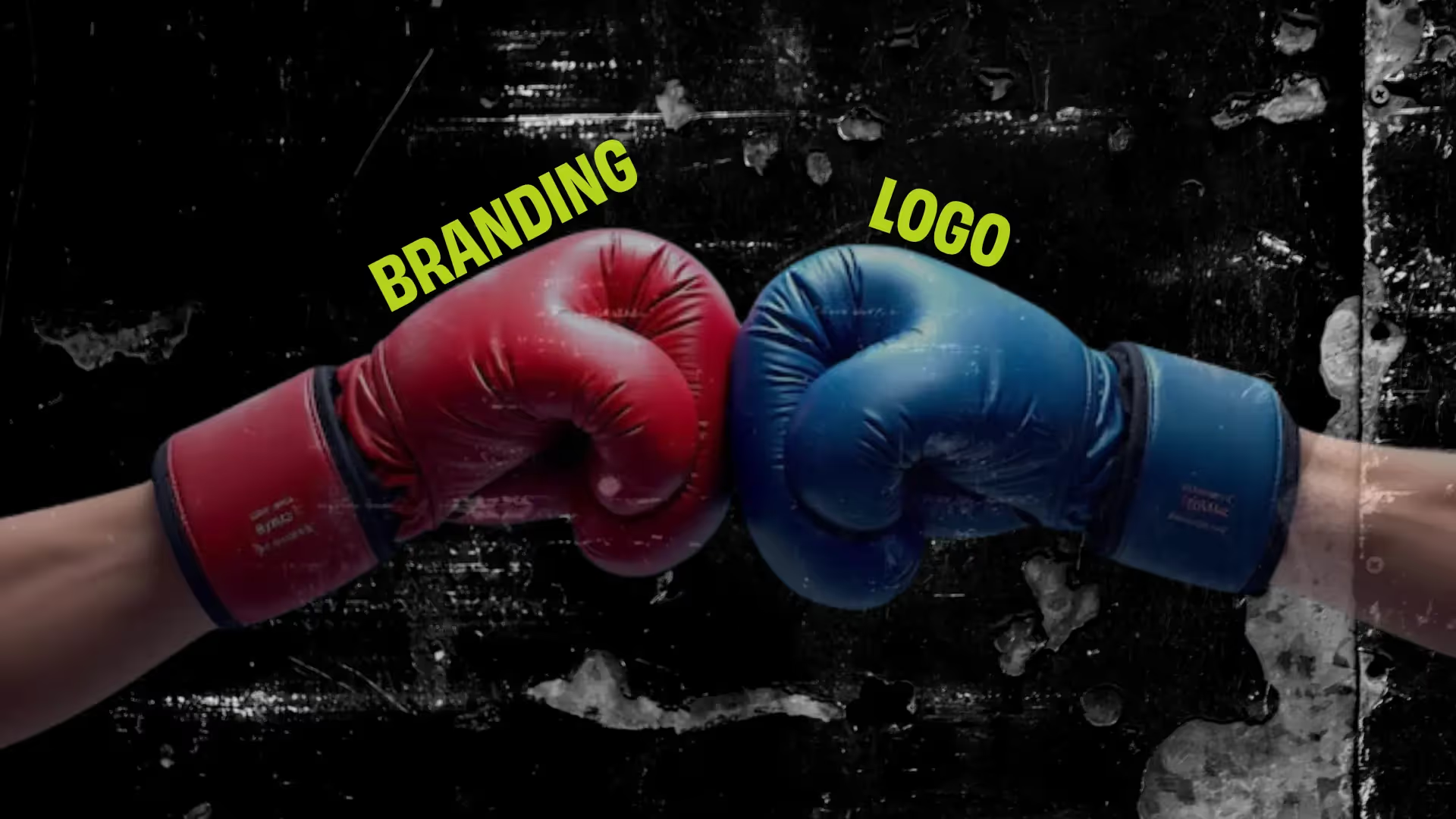
Branding vs Logo: What’s the Difference?
A logo is a visual identifier. Branding is the wider system of decisions that determines what a business means, how it behaves and how people learn to recognise it.
That distinction matters because businesses regularly ask a logo to solve problems that have little to do with the logo itself. A new mark cannot clarify a confused offer, decide how the company should speak, make inconsistent marketing feel related or create differentiation where none exists.
A good logo can identify the company extremely well. Branding gives that identifier context. That is why a business can have a perfectly competent logo and still look different every time it appears.
The useful distinction is identifier versus system. Confusing the two can lead to expensive redesigns that change the most visible part of the business without fixing the reason the brand felt wrong in the first place.
What is branding?
Branding is the system of strategic, verbal and visual decisions that gives a business recognisable meaning.
It determines what the company wants to be known for and gives people a practical way to express that idea repeatedly.
That can include positioning, messaging, tone of voice, typography, colour, imagery, layout, illustration, photography, motion, packaging and the logo itself.
The point is not to accumulate a longer list of deliverables. A useful branding system should reduce the number of decisions the business has to reinvent later.
What kind of photography belongs to us? How should a product launch sound? What should a sales deck look like? What can change from campaign to campaign without making the company look newly branded every month?
Without those decisions, every new website page, package, presentation or social post becomes another small identity exercise. Different people solve the same problem differently, and the company gradually accumulates several versions of itself.
What is a logo?
A logo is a distinctive visual mark used to identify a business, product or organisation.
Identification is important work. A good logo needs to remain recognisable at different sizes, reproduce reliably and work in the environments where the business actually appears.
For one company that might mean signage and packaging. For another it might mean an app icon, social avatar and the corner of a presentation. Often it needs to survive all of them.
The mistake is not caring too much about logo design. It is expecting the logo to carry decisions that belong elsewhere.
The mark on a package can tell you who made it. It cannot, by itself, decide why the product feels premium, playful, technical or rebellious. Those meanings accumulate through everything around it.
Branding vs logo: the difference
The simplest way to separate the two is to look at the job each one is being asked to do.
The logo’s primary job is identification. It gives the business a visual mark people can recognise and associate with a name. Its scope might include a wordmark, symbol, lock-ups, responsive versions and the rules needed to use them properly.
Branding has a wider job. It defines and organises how the business is understood and recognised. It can shape positioning, messaging, verbal identity, visual language and the way all of those elements behave across websites, packaging, campaigns, presentations, social content and other applications.
When a logo is weak, the problem is usually relatively specific: the business may be difficult to identify, the mark may not scale properly, or it may simply be impractical to use.
When the wider branding is weak, the symptoms appear everywhere. Marketing feels inconsistent. Different teams describe the company differently. Campaigns look unrelated. The brand starts relying on an oversized logo because there are few other recognisable signals doing any work.
A useful logo question is: Does this mark identify us effectively?
A useful branding question is: Do we have a coherent way to make future decisions?
The logo is not the brand. It is one place the brand becomes visible.
A company can therefore have an excellent logo inside a weak identity. The mark may be distinctive and technically sound while the website looks generic, the social content changes personality every week and every campaign introduces a new visual language.
In that situation, the logo may already be doing its job.
Why businesses confuse a logo problem with a brand problem
The logo is easy to blame because everybody can point at it.
A company says the brand feels dated, so attention turns to the mark. But what actually feels dated? It could be the typography, photography, packaging, website, language, category position or all of them together.
Changing the logo solves only one of those possibilities.
The same problem appears when a business says it no longer feels distinctive. Sometimes the logo genuinely is generic. Sometimes the mark is sitting inside a visual and verbal system built from the same conventions as every competitor.
Redrawing the symbol can create the appearance of significant change while leaving the underlying problem untouched.
There is also a practical reason logo redesigns become the default response: changing a visible object is easier than deciding what the company should actually stand for, what it should stop saying and where it should behave differently from the category.
A new mark is concrete. Those decisions are harder.
Which comes first: branding or logo design?
You need enough brand thinking to make the logo decision deliberate.
That does not mean every business needs months of workshops before somebody opens Illustrator.
At minimum, it helps to know who the business is for, what it should be known for, what needs to feel different from competitors, what people should learn to recognise and where the identity actually needs to work.
Those answers affect design directly.
A company selling into enterprise procurement has a different identity problem from a drinks brand fighting for attention on a supermarket shelf. A digital product has different technical requirements from a business whose mark needs to work across retail environments and physical packaging.
Without that context, logo design becomes disproportionately dependent on taste: which shape feels better, which font looks more premium, which option the room prefers.
Taste matters. It is simply more useful when the design has a job to do.
Do you need a new logo or a broader branding project?
Sometimes the answer really is: fix the logo.
A focused logo project can be the right answer when the mark becomes illegible at small sizes, does not reproduce properly, the company has changed its name, inconsistent versions are circulating, the files are technically unusable or the wider identity works but the mark no longer fits it.
In those situations, rebuilding the entire brand may add cost without solving anything useful.
A broader branding problem looks different. The business may be difficult to explain. Competitors all seem to make the same claims. The website, packaging, social content and sales material feel unrelated. Different teams describe the company differently. Every campaign requires a completely new aesthetic because nobody knows what should remain consistent.
One particularly useful warning sign is repeated logo redesign. If the mark keeps changing while the same problems keep returning, the problem may not be the mark.
There is a grey area. A branding project may reveal that the logo also needs to change, while a focused logo project may expose weaknesses elsewhere in the identity.
The useful decision is not “logo or branding?” in the abstract. It is identifying where the actual problem sits.
What should a branding project actually produce?
The useful output of branding is not a large guidelines PDF. It is a business that can make better decisions afterwards.
A clearer position should make it easier to decide what the company wants to be known for and which claims are worth repeating.
A verbal system should help different writers sound as though they are working for the same business without forcing everyone to use identical sentences.
A visual system should define what happens beyond the logo: typography, colour, imagery, composition and any distinctive devices that contribute to recognition.
And the rules need to survive real use. Eventually the identity will be handled by marketers, sales teams, agencies, printers, retailers and production partners. If every application requires the original designer to explain what is allowed, the system has not reduced much complexity.
This operational value is easy to underestimate. Good branding does not simply make the company look better. It makes hundreds of future creative and commercial decisions easier to make.
The remove-the-logo test
Take your homepage, a social post, a package, a campaign and a presentation.
Hide the logo.
Would somebody familiar with the company still have any chance of knowing who made them?
This is not an argument for removing logos. It is a diagnostic.
Look at what remains: typography, colour, composition, imagery, language, distinctive shapes, illustration, motion or product behaviour.
If removing the mark makes every asset immediately anonymous, the wider identity may be asking the logo to do too much.
Recognition is usually distributed across several signals. Repeating those signals gives people more ways to learn what belongs to the business.
There are limits to the test. Nobody should expect every cropped image or isolated asset to be instantly identifiable without a logo. Some applications genuinely need the mark to do the identifying.
The question is simply whether the logo is one recognisable signal or the only recognisable signal.
So, which one does your business need?
If the wider business and identity are working and the mark itself is the problem, solve the logo.
If the business lacks clarity, distinction or a consistent way to express itself, changing the mark alone will probably leave the larger problem intact.
A logo helps people identify the business. Branding determines what that business means, how it behaves and what people learn to recognise around the logo.
If the problem is bigger than the mark, explore Social Fixation’s branding work.

